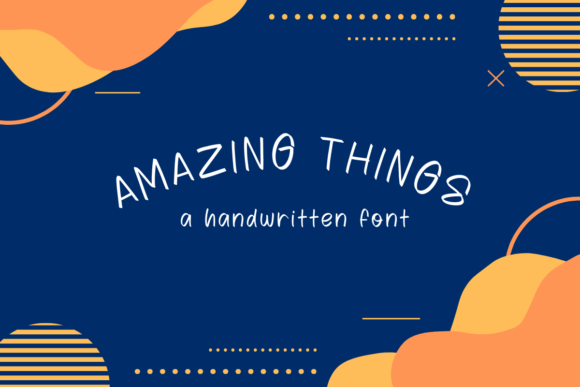
Amazing Things: The Handwritten Font for Creative Projects
There's a certain magic in a font that feels personal. It doesn't just display words; it carries a tone, a mood, a human touch. That's exactly the space where Amazing Things lives. This is a fun, playful, and distinctly handwritten typeface designed to inject warmth and approachability into your work. Forget the stiff, impersonal feel of some modern typography. Amazing Things is about connection, making it a powerful tool for anyone looking to add a layer of authenticity to their brand identity or creative project.
Visually, it strikes a careful balance. The letterforms are casual and fluid, mimicking the natural rhythm of pen on paper, but they're crafted with enough consistency to ensure legibility. It avoids the overly loose or chaotic look that can plague some script fonts. Instead, you get a clean, upbeat aesthetic. The slightly uneven baseline and the organic connections between letters give it a genuine, handcrafted quality. It's a premium font that feels approachable, making it an excellent creative font choice for projects that need to feel friendly, genuine, and engaging.
Where Amazing Things Truly Shines
The true test of any typeface is its versatility. Amazing Things isn't a one-trick pony. Its personality is adaptable, making it a valuable asset in a designer's toolkit. Let's break down its ideal applications.
Branding and Identity
For small businesses, boutiques, cafes, or personal brands, Amazing Things can be the cornerstone of a welcoming brand identity. Use it for your logo design to instantly signal approachability and creativity. It's perfect for brand names that want to feel personal rather than corporate. Think of a local bakery, a handmade jewelry shop, or a life coach's personal brand. The font communicates care and individuality right from the first glance. It's a commercial font that helps build recognition through a unique, human feel.
Marketing and Digital Content
In the fast-paced world of social media graphics and digital ads, grabbing attention is key. Amazing Things excels here. Its playful style makes headlines and call-to-action phrases pop on platforms like Instagram, Pinterest, and Facebook. Use it for quote graphics, promotional banners, or email newsletter headers to cut through the noise. For web design, it's best used for impactful headlines, pull quotes, or specific call-outs rather than long body text, where a sans serif font or a sturdy serif font would be more readable. This strategic use creates a strong visual hierarchy and guides the viewer's eye.
Publishing and Editorial Design
While not a workhorse for body copy, Amazing Things finds a perfect home in editorial design. Imagine it gracing the cover of a lifestyle magazine, used for chapter titles in a cookbook, or as pull quotes in a blog post. It adds a touch of personality and breaks up the monotony of standard text, improving overall readability by creating visual interest and pacing. For packaging design, especially for artisanal or eco-friendly products, it can convey the product's handmade essence beautifully.
Crafts and Personal Projects
This is where the font's heart is. For crafters, hobbyists, and makers, Amazing Things is a dream. It's ideal for creating custom greeting cards, wedding invitations, party decorations, scrapbooking, and printable wall art. Its friendly demeanor makes any DIY project feel special and professionally designed. It's one of those design assets that you'll reach for again and again because it just works, saving time while elevating the final product.
Practical Guidance for Using Amazing Things
Choosing the right font is only half the battle. Using it effectively is what separates good design from great design. Here’s how to get the most out of Amazing Things.
Evaluating Project Fit: Before you commit, ask yourself: Does my project need to feel personal, playful, or approachable? If the goal is to convey serious authority, technical precision, or minimalist cool, this probably isn't your font. But for warmth, creativity, and friendliness, it's a strong contender.
Mastering Font Pairing: A handwritten font like this rarely works well alone in a complex layout. The key is a thoughtful font pairing. Pair it with a clean, neutral sans serif font (like Open Sans or Lato) for body text. This creates a beautiful contrast: the personality of Amazing Things for headlines and the clarity of the sans serif for paragraphs. You could also pair it with a simple, classic serif font for a more elegant, editorial look. Avoid pairing it with other ornate or script fonts, as this creates visual chaos.
Considering Readability and Hierarchy: Use Amazing Things for display purposes: headings, subheadings, logos, and short bursts of text. For body copy, paragraphs, or detailed instructions, always opt for a more legible typeface. This practice isn't just about aesthetics; it's fundamental to creating clear visual hierarchy and ensuring your audience can easily consume your message.
Reviewing Included Styles: A quality premium font often comes with more than one style. Check if Amazing Things includes variations like bold, italic, or alternate character sets. These extras can provide valuable flexibility, allowing you to create emphasis and variety within your design while maintaining a consistent typographic voice.
Understanding the License: If you plan to use Amazing Things for a client project, merchandise, or a product for sale, you need to ensure you have the correct commercial font license. Most foundries offer different licenses for personal, desktop, web, and app use. Reviewing this before you start your project is a non-negotiable professional step.
In the end, Amazing Things is more than just a collection of glyphs. It's a tool for storytelling. It allows designers, entrepreneurs, and creators to build a bridge of personality and trust with their audience. By understanding its strengths and applying it thoughtfully, you can leverage this handwritten font to make your projects not just look good, but feel genuinely amazing.